Showing posts with label At Home with Hippocrene. Show all posts

Friday, July 8, 2011

At Home: Big Blueberry Muffins

After sampling cuisines from around the world, I decided to come back to the good old U.S. of A. for our nation's birthday. This recipe for blueberry muffins is from Farms and Foods of Ohio by Marilou K. Suszko, and they're so simple and delicious. As indicated by the title, the book not only gives you ways to use ingredients, but where they came from. There are wonderful stories about the various Ohio farms, vineyards, and even a shrimp pond! 


Eating locally and seasonally have become full-grown movements, and everyone has heard the benefits of reducing your carbon footprint, supporting local businesses, and better tasting foods. I did my best to stay true to the book's message: the blueberries I bought came from New Jersey, the eggs from Brooklyn, and the milk from upstate New York. And although I do enjoy the NYC greenmarkets, all were available at my grocery store. If you want to learn more, a great resource is the Sustainable Table Food Calendar. Just select your state and season, i.e. New York and Early July, and it will tell you what is in season for your area! 


Big Blueberry Muffins 
(from Farms and Foods of Ohio, page 27)

Makes one dozen

6 tablespoons unsalted butter
5 large eggs
1/2 cup whole milk
3 1/2 cups sifted flour all-purpose flour
2 tablespoons plus 1 teaspoon baking powder
3/4 cup granulated sugar
1/8 teaspoon salt
1 1/2 cups blueberries
Coarse sugar for sprinkling
parchment paper or paper muffin cups


1. Rinse the blueberries in cold water. Double check them for stems, they're are always a few that still have them!
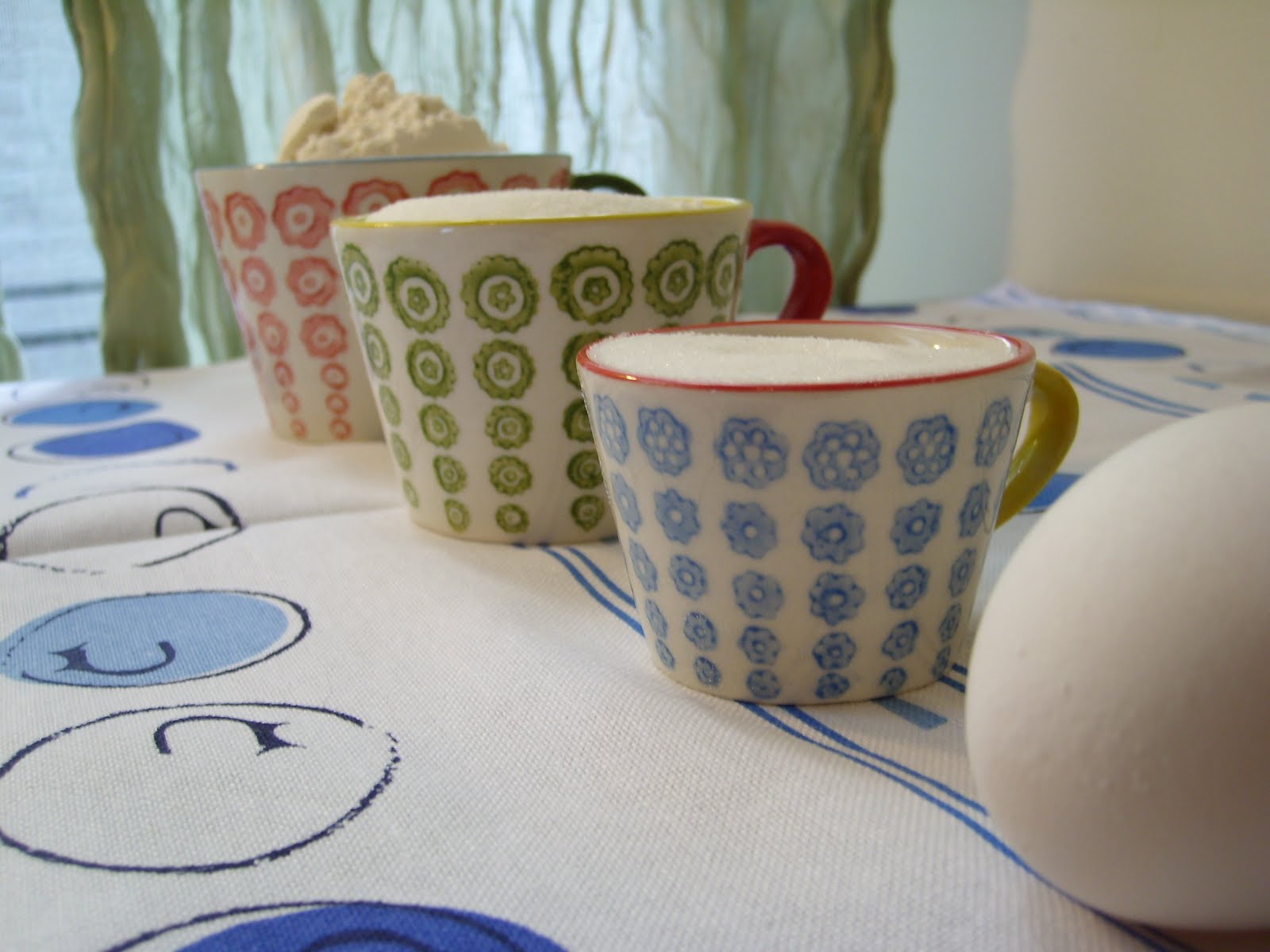

2. Melt the butter in a small saucepan over medium heat or in the microwave. Set aside to cool. In a large mixing bowl, beat the eggs until well blended, about 2 minutes. Add the melted butter and the milk.

3. In a separate bowl, sift in the flour. Add in the baking powder, sugar and salt. Add to the egg mixture and mix until just blended, less than one minute. It will be a thick, sticky dough if you overdo it! If you want to get fancy, you can add a dash of vanilla and 1/2 teaspoon of lemon zest. Fold in the blueberries, being careful not to burst them.


4. Cover the bowl tightly with plastic wrap and refrigerate for 2 hours. This is the secret to "crispy, crunchy bakery-store crowns" - don't skip it!

5. After 1 hour and 55 minutes, preheat the oven to 400 F. Take the bowl out and let it warm up a bit while you prepare the muffin tin. I used parchment paper instead of paper liners, and it's very simple to do. Cut four 5" wide strips of paper, then hold them together and cut into thirds. Now you have 12 squares that will give the muffins a professional look, and allow them to puff up without the "mushroom" shape that sticks to the pan.


6. Put a spoonful of batter into the center of the paper and then lower it into the tin. Repeat with the other papers, and use the remaining batter to top off each one. Sprinkle the tops with coarse sugar. Bake for 25 to 30 minutes, or until the tops are golden brown.


7. Remove from the oven and let cool before removing from the pan. If you used the parchment squares, just grab the corners and pull them out to cool on a rack.


Thursday, November 18, 2010

Thanksgiving Your Way

Thanksgiving draws near, and there are plane and train tickets being purchased, silver being polished, and guest rooms cleared out across the country. As the only holiday that makes no bones about the meal being the main attraction, you might be planning a menu or testing out a new pie recipe. Perhaps you are the lone cook, part of a multi-generational team, or aided by waist-high sous chefs.

As our growing catalog attests, there are myriad ethniticites and food cultures thriving in the U.S. and we're curious about how you celebrate Thanksgiving. Do you incorporate local flavors or specialties? Is your dinner a fusion of traditional Thanksgiving dishes and another cuisine? Have you never had turkey? Tell us about your Thanksgiving dinner in the comments!


Sample Menus from Hippocrene Books

From Healthy South Indian Cooking


  *Roasted Turkey

  *Savory Mushroom Rice, page 115

  *Green Beans Poriyal, page 158 OR Peas Poriyal, page 193 OR Cauiliflower Poriyal, page 179

  *Potatoes Roasted with Garlic and Tomatoes, page 207

                                                     *Acorn Squash Masala Poriyal, page 154


From Argentina Cooks!


  *Creole Roast Turkey, page 42
 
  *Persimmon and Sausage Stuffing, page 43

  *Pumpkin Humitas, page 243

  *Chard in Cream Sauce, page 54 OR Green Beans with Potatoes, page 281

  *Piquant Sweet Potatoes, page 163


From Farms and Foods of Ohio


  *Turkey Brined in Buttermilk, page 57 OR Roasted Heritage Turkey, page 58
 
  *Heritage Dressing (Stuffing), page 59

  *Heirloom Tomato Salad, page 90 OR Autumn Salad with Maple Vinaigrette, page 140

  *Lavender Roasted Vegetables, page 134

  *Horseradish Mashed Potatoes, page 205

                                         *Maple Walnut Tart, page 139

Tuesday, October 26, 2010

At Home with Hippocrene

This year marked the 200th anniversary for the Munich Oktoberfest, the harvest gathering which is the world's largest folk festival. If you haven't already celebrated Oktoberfest, this recipe from Nadia Hassani's Spoonfuls of Germany will certainly have you considering a visit to Bavaria for next year's festival. And even if you have, this delicious and hearty dish will become a go-to dinner as the temperature drops.

I have German heritage and it manifests itself in funny ways, like our tradition of sauerkraut with Thanksgiving dinner. Ironically, I live in Yorkville and had no idea when I moved to the city that it was once a working-to-middle class neighborhood of primarily German, Hungarian, Czech, Slovak and Polish immigrants. After the General Slocum disaster in the early 1900's, Little Germany on the Lower East Side on Second Avenue moved up to the 80's. Although the area has changed, there are still signs Yorkville's past with Schaller & Weber's grocery, Orwasher's Bakery, Heidelburg restaurant and St. Joseph's Catholic Church all within a few blocks of each other. I purchased my bratwurst from Schaller & Weber, and load up on all the varieties of Bahlsen lebkuchen there at Christmastime.

Himmel und Erde (Potatoes and Apples with Bratwurst)
(from Spoonfuls of Germany page 160)


Thursday, September 16, 2010

At Home with Hippocrene

It is now officially fall--the kids are back in school, the days are getting shorter, and, like creatures preparing for hibernation, we start to crave heavier fare. The supermarket displays of watermelon and fresh berries are replaced by apples, pumpkins, and a variety of squash. I decided to pick a hearty, but simple dinner that would be a good transition from summertime barbecues and fish tacos. It didn't take long for me to select Judith Pierce Rosenberg's recipe for Swedish Meatballs from A Swedish Kitchen.

Perhaps this is because my previous experiences with Sweden's national dish have taken place at IKEA, their unofficial ambassador to the world, usually getting items before school starts. The trip for a new bookcase or chair is always made better by a meal of meatballs in thin gravy with red potatoes and lingonberry preserves. And of course, you can stop by the market on the way out and get the gravy mix, frozen meatballs, a jar of preserves, and perhaps a box or two of gingersnaps. But with this recipe that would be a terrible waste! However, hopefully you have a jar of those preserves lingering in the back of the fridge. If not, Rosenberg recommends substituting whole-berry cranberry sauce or red currant preserves. When forced to do without, I  prefer the latter.

Swedish Meatballs (Kottbullar)
(from A Swedish Kitchen page 141)


Thursday, September 2, 2010

At Home with Hippocrene

Both previous editions can be seen here.

After work one day I went to the farmer's market in Rockefeller Center (that will unfortunately be ending soon!) and tried to get some ideas for dinner. There were several different farms and businesses there, selling everything from homemade soaps and pies to fresh herbs and produce. After wandering around I eventually came up with spaghetti after spotting fresh basil and fried chicken with corn on the cob, and some tomatoes and cucumber for salads. One seller had okra, and after passing by a few times, I helped myself to a bag and started filling it up. I'd never made okra before but sometimes you just have to go for it!


So I hunted through the indexes of our cookbook library, trying to decide what kind of okra dish would be my guinea pig.  Previously we've enjoyed main entrees from the Philippines and India, so I wanted to try an altogether different cuisine. I discovered that okra is sometimes called "bride's fingers" in Afghan Food and Cookery, and that Greeks call them bamia in Regional Greek Cooking, but so do the Jewish-Iraqi (Mama Nazima's Jewish-Iraqi Cuisine).But I thought this simple preparation from Cooking with Cajun Women would go well with the fried chicken dinner I'd begun to fantasize about. They're in season from July to November, or until the first frost, so enjoy them while you can! 

Thursday, August 12, 2010

At Home with Hippocrene

Here's Colette with the next recipe in our series. In case you missed our first edition of At Home with Hippocrene you can find it here.

As members of the office can attest, I usually vote for Indian fare if we go out for lunch. So picking Chettinad Chicken Kurma from Healthy South Indian Cooking as the second featured recipe might not come as a surprise. We have several Indian cookbooks to chose from, so I certainly intend on trying them all! This recipe involved a trip to an Indian grocery store near the office on 28th Street. (Lexington Avenue between 26th Street and 30th Street is known as Curry Hill or Little India, and is packed with Indian restaurants.) I already had cinnamon sticks, curry powder, and bay leaves in my pantry, and was able to get garam masala, turmeric, white poppy seeds, and cardamom at my neighborhood supermarket. But I still needed unsweetened coconut powder, fennel seeds, and curry leaves.

I went up and down the spice aisle, with my marked up list in hand, but I couldn't find dried curry leaves. After going through the little store several times over, I finally asked for help and was directed to the refridgerated case! There were bunches of dark green sprigs hand-packaged in plastic bags. When I got home to look over the cookbook, sure enough it said "dry bay leaves" but not dry curry leaves! It just goes to show you that not only should you reread a new recipe's directions, but you should also pay attention to the ingredients.

Chettinad Chicken Kurma
(from Healthy South Indian Cooking, pages 228-29)

2 lbs skinned chicken pieces (about 6 thighs or breasts)
3/4 cup ground fresh coconut or unsweetened powder
4 small slices ginger root
2 garlic cloves, peeled
2 green chili peppers or 2 to 4 whole dried red chili pepper (more, if desired)
1/4 cup roasted chickpeas
12 raw almonds
3 teaspoons cumin seeds
2 tablespoons white poppy seeds
1teaspoon fennel seeds
4 to 6 slivers cinnamon stick
1 tablespoon butter
2 tablespoons canola oil
1 1/2 dry bay leaves
8 to 10 curry leaves
3/4 cup sliced onion (cut lengthwise)
1/2 cup chopped tomato
1/2 teaspoon turmeric powder
2 teaspoons salt
1 teaspoon curry powder
3/4 teaspoon cardamom powder
1/3 minced fresh coriander (cilantro) leaves


Directions:

1. Cut the chicken into small pieces. Wash them, drain, and set aside.


I found getting slivers of cinnamon to be quite difficult.
The best method turned out to be cutting the stick in half lengthwise,
between the curls, and then taking thin strips off the top.


2. In an electric blender, grind together coconut powder, ginger root, garlic, chili peppers, roasted chickpeas, almonds, 1 1/2 teaspoons cumin seeds, white poppy seeds, 1/2 teaspoon fennel seeds, and 2 or 3 slivers of cinnamon stick. Add 3 cups of hot water to facilitate the grinding process. (Water must be hot for the coconut to blend properly.) Process on high for at least 5 minutes until mixture has a creamy, liquid consistency. Set kurma sauce aside.


4. Heat butter and oil in a large saucepan over medium heat. When the oil is hot, but not smoking, add bay leaves, curry leaves, remaining 2 or 3 slivers of cinnamon stick, remaining 1 1/2 teaspoons cumin seeds, and remaining 1/2 teaspoon fennel seeds. Stir-fry until seeds are golden.

5. Immediately add onion and tomato and cook for a few minutes. Add turmeric powder and mix well.
This is a good point to start making your rice. I always have jasmine rice in the pantry, but I bought a box of basmati for this dish. It simply doesn't taste the same without it.


6. Add the chicken pieces to saucepan. Stir well and cook uncovered over medium-high heat for 3 to 5 minutes, until chicken becomes opaque and slightly brown.


6. Pour kurma sauce over chicken mixture. Add salt, curry powder, and 1 cup warm water. (I omitted the water simply because my pot was full, but the dish wasn't affected at all.) Mix well. Add cardamom powder. Cook, covered, over low heat until chicken becomes tender, about 20 minutes. Stir occasionally. Give the sauce a taste to make sure it it's not too spicy, or too mild. You can add 1/4 cup of tomato sauce to cool it down, or add more chili pepper or cayenne powder to kick up the heat.


7. Add coriander (cilantro) and continue cooking over low heat for a few more minutes. At this point, I drizzled some store-bought naan with olive oil and put it in the toaster oven on the light setting. The rice should be finished by now, and you can serve the chicken kurma over the rice with warm naan and a little garnish of curry leaves. Delicious!


Cleaning up your plate with naan might be the best part!

Wednesday, July 28, 2010

At Home with Hippocrene

We're introducing a new feature at Hippocrene Cooks called At Home with Hippocrene. Colette Laroya, our editorial assistant, will periodically try a recipe from our cookbook collection at home and share the results. We hope you enjoy this first edition!

A few months ago I married into a large, loving Filipino family. I had never tasted Filipino food before my husband and I started dating, and I quickly learned to love the staples of family parties: crispy lumpia, pancit, chicken adobo, pork menudo, kare-kare, and leche flan. I astounded them with my love of rice, and the fact that I grew up with the same imported jasmine brand they used. So when it came to deciding which cookbook to try first, I knew it would have to be Fine Filipino Food.

I have spent many hours as an observer over the years, but I had never tried to make the dishes myself. My mother-in-law doesn't cook, so my husband wasn't able to offer any advice. I chose Chicken Adobo with Coconut Milk because adobo, as Bartell notes, "could very well be called the national dish of the Philippines" and for its simplicity. I knew the dish was a success when I kept catching my husband taking pieces from the pot!

Chicken Adobo with Coconut Milk
(as featured in Fine Filipino Food, page 57)

Serves 4

1 (2-pound) chicken, cut into serving-size pieces
1 cup white vinegar
1/3 cup soy sauce
1/4 cup minced garlic
1/2 teaspoon ground black pepper, or to taste
2 bay leaves
1/2 Tbsp black peppercorns
1 Tbsp raw or brown sugar
1 tsp patis (fish sauce) or 1 tsp salt, or to taste
1 (12-oz) can coconut milk

Directions:


1. Mince the garlic. First remove the brown end of the clove, then crush it under the flat of your knife (I used about 12 medium-sized cloves to make 1/4 cup).


2. Combine the garlic with the vinegar, soy sauce, ground pepper, bay leaves, peppercorns and brown sugar in a non-aluminum 4-quart pot. Aluminum interacts chemically with vinegar and affects the flavor. I used a stainless steel stock pot, but you can also use ceramic, glass, or wrought iron cookingware.


3. Mix well and add in the chicken. I used a chicken breast of the same weight to avoid cutting up a whole chicken. (However, you might have complaints about the lack of drumsticks.) Marinade for 2 to 3 hours in the refrigerator.


4. Place the pot on high heat and bring to a boil. Lower the heat and simmer for 10 minutes, or until the chicken is tender. (This is a good time to start your rice cooker.) You can remove the chicken and broil them 1 to 2 minutes on each side, but I skipped this step in the interest of simplicity. One-pot meals are easy to clean up!


5. Add the patis (or salt) and coconut milk and boil until it has been reduced by half. You'll see it take on lighter, creamier color. Remove the bay leaves. Serve over a bed of rice with the sauce.


The moist, tender chicken stands on its own, but you can round out your meal with steamed broccoli or Jicama Salad (page 41). The crisp jicama is perfect for a light summer salad.