Showing posts with label recipe. Show all posts

Monday, October 31, 2011

At Home: Chocolate Whoopie Pies

I recently watched a very learned debate- no, not those debates. This one centered on the merits of Halloween candy, specifically fruity candies versus chocolate ones. Everyone chimed in with their own opinion, until someone confessed that they didn't really care for candy. "I'd rather have cookies or cake than candy." 


For those of you who feel the same way, this is the perfect recipe. Whoopie pies are cookie and cake all rolled into one, moist and chewy with marshmallow fluff-based icing to hold them together. They make great party favors; simply put them into small clear bags and tie with ribbon. Even the candy lovers won't be able to resist!


Chocolate Whoopie Pies

Cookie
1/2 cup solid white vegetable shortening
1 cup sugar
1 egg
1 teaspoon vanilla extract
2 cups flour
1 1/2 teaspoons baking soda
1/2 teaspoon salt
6 tablespoons cocoa powder
1 cup milk

Filling
1 (8-oz) package cream
1 (7 1/2- oz) jar Marshmallow Fluff
1 teaspoon vanilla extract
orange food coloring (optional)

Note: I added these steps to make all the cookies the same size, so tops and bottoms match. You can skip this step, as well as piping the batter, but keep in mind that the whoopies will look more rustic. It's hard to get a uniform shape when spooning onto the sheet. Also, see below for directions on mini whoopie pies.

1. Cut a piece of parchment paper to fit your cookie sheet. Trace a small glass or bowl (the diameter of my circles is a little more than two inches) making sure you leave 1 1/2-2" between each. Repeat on a second sheet on paper.

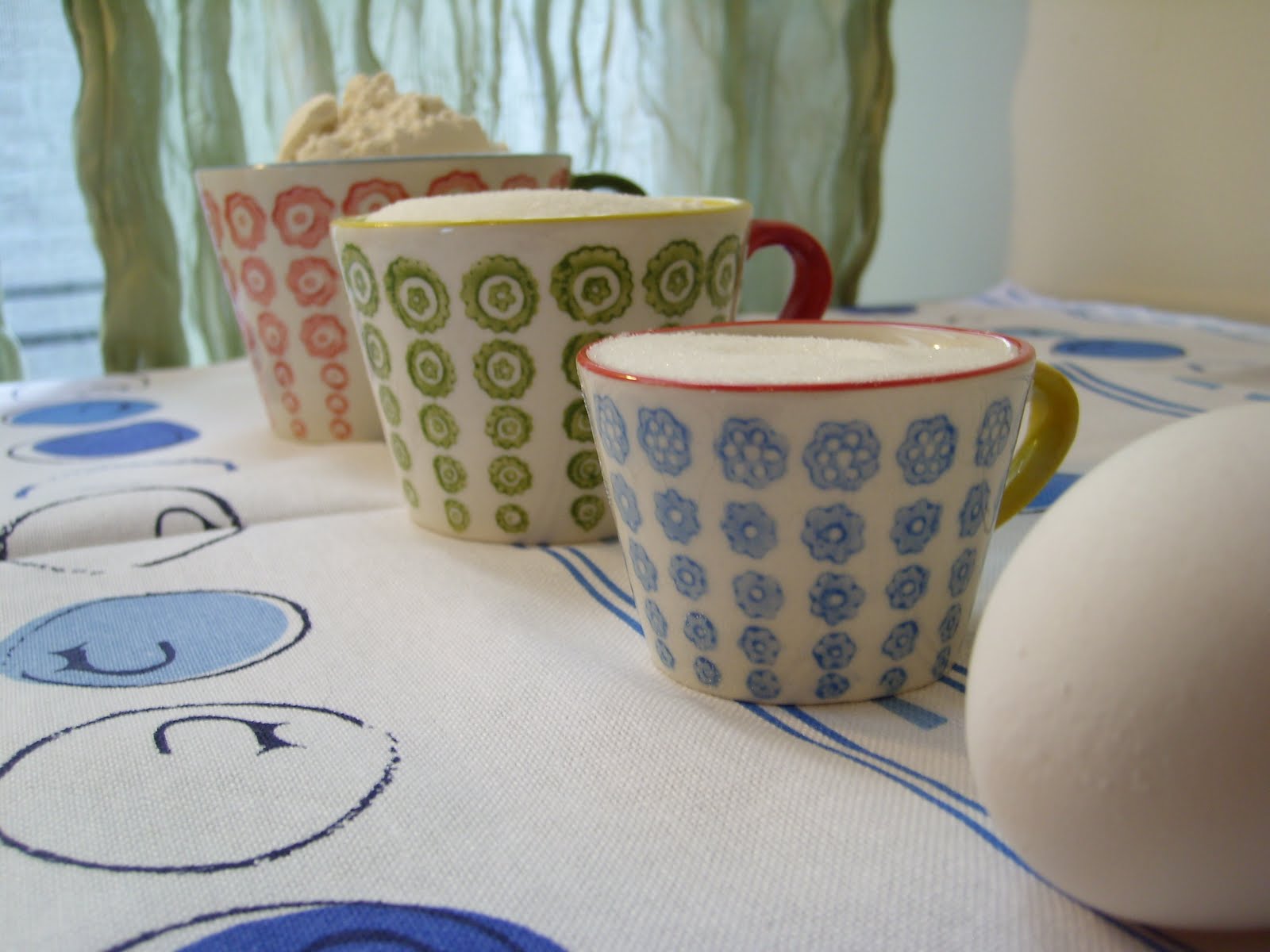
Parchment tends to roll up, so measuring cups make handy paperweights.

2. Preheat the oven to 350 degrees.

3. Cream together the vegetable shortening and sugar in a large bowl. Beat in the egg and vanilla.

4. In another bowl, whisk together the flour, baking soda, salt and cocoa powder.

5. Alternate adding the flour mixture and milk into the large bowl. Beat the batter until the flour and milk are fully incorporated.


6. Fill a large pastry bag or plastic bag with the batter. If using a plastic bag, cut off the tip. Making sure the pencil side is down, pipe a circle inside the line and then fill by going in a spiral to the center. 


7. Bake for 25 minutes. My oven seemed to get them done a tad faster, usually 20-22 minutes. 

8. Let cool. In a medium size bowl, blend the cream cheese and Marshmallow Fluff together and add in the vanilla and food coloring.


Mini Whoopie Pies

I didn't draw circles for the mini pies, but the diameter was about 1 1/4". Bake at 350 degrees for 15 minutes. These bite-size pies are great for kids!


Friday, July 8, 2011

At Home: Big Blueberry Muffins

After sampling cuisines from around the world, I decided to come back to the good old U.S. of A. for our nation's birthday. This recipe for blueberry muffins is from Farms and Foods of Ohio by Marilou K. Suszko, and they're so simple and delicious. As indicated by the title, the book not only gives you ways to use ingredients, but where they came from. There are wonderful stories about the various Ohio farms, vineyards, and even a shrimp pond! 


Eating locally and seasonally have become full-grown movements, and everyone has heard the benefits of reducing your carbon footprint, supporting local businesses, and better tasting foods. I did my best to stay true to the book's message: the blueberries I bought came from New Jersey, the eggs from Brooklyn, and the milk from upstate New York. And although I do enjoy the NYC greenmarkets, all were available at my grocery store. If you want to learn more, a great resource is the Sustainable Table Food Calendar. Just select your state and season, i.e. New York and Early July, and it will tell you what is in season for your area! 


Big Blueberry Muffins 
(from Farms and Foods of Ohio, page 27)

Makes one dozen

6 tablespoons unsalted butter
5 large eggs
1/2 cup whole milk
3 1/2 cups sifted flour all-purpose flour
2 tablespoons plus 1 teaspoon baking powder
3/4 cup granulated sugar
1/8 teaspoon salt
1 1/2 cups blueberries
Coarse sugar for sprinkling
parchment paper or paper muffin cups


1. Rinse the blueberries in cold water. Double check them for stems, they're are always a few that still have them!


2. Melt the butter in a small saucepan over medium heat or in the microwave. Set aside to cool. In a large mixing bowl, beat the eggs until well blended, about 2 minutes. Add the melted butter and the milk.

3. In a separate bowl, sift in the flour. Add in the baking powder, sugar and salt. Add to the egg mixture and mix until just blended, less than one minute. It will be a thick, sticky dough if you overdo it! If you want to get fancy, you can add a dash of vanilla and 1/2 teaspoon of lemon zest. Fold in the blueberries, being careful not to burst them.


4. Cover the bowl tightly with plastic wrap and refrigerate for 2 hours. This is the secret to "crispy, crunchy bakery-store crowns" - don't skip it!

5. After 1 hour and 55 minutes, preheat the oven to 400 F. Take the bowl out and let it warm up a bit while you prepare the muffin tin. I used parchment paper instead of paper liners, and it's very simple to do. Cut four 5" wide strips of paper, then hold them together and cut into thirds. Now you have 12 squares that will give the muffins a professional look, and allow them to puff up without the "mushroom" shape that sticks to the pan.


6. Put a spoonful of batter into the center of the paper and then lower it into the tin. Repeat with the other papers, and use the remaining batter to top off each one. Sprinkle the tops with coarse sugar. Bake for 25 to 30 minutes, or until the tops are golden brown.


7. Remove from the oven and let cool before removing from the pan. If you used the parchment squares, just grab the corners and pull them out to cool on a rack.


Friday, April 1, 2011

Gazpacho from La Buena Mesa's Elizabeth Parrish

Hippocrene will have two new cookbooks out in just two weeks! We're very excited to have both authors on Hippocrene Cooks as guest bloggers this week and next. Today, Elizabeth Parrish, author of La Buena Mesa: The Regional Cooking of Spain, shares with us a delicious recipe for gazpacho. Be sure to check back next week for Giovanna's recipe from The Cooking of Emilia-Romagna! Elizabeth writes to us from Tarragona, Spain, which is about 60 miles south of Barcelona:


Summer is fast approaching and as food choices gradually shift from the hearty stews and legumes of winter to lighter fare; I begin to think about that pitcher of gazpacho that frequents my refrigerator once the warm weather hits. I like to mix up a batch and gradually eat (or drink!) it over a period of two to three days. It’s not just that it tastes good (it does); gazpacho also manages to be refreshing, satisfying and, between the juicy ripe tomatoes, the extra virgin olive oil and other fresh vegetables, a veritable antioxidant cocktail.

Tomatoes come in a variety of shapes and sizes. Spaniards distinguish between tomatoes that you use to make a sauce and those you toss into a green salad. Salad tomatoes are firm and have a greenish hue to them. All other varieties, be they large or small, pear-shaped or round are softer to the touch and yield more pulp and juice. Whenever I make gazpacho, I look for ripe, juicy tomatoes and, fortunately, the ones that work the best also happen to be the least expensive.

Another key ingredient to making a smooth gazpacho is olive oil. You want to choose a high quality, mild, extra virgin olive oil. While I love the aroma and flavor of aromatic olive oils, I find that they overpower the gentle tomato scent of gazpacho. In my opinion, mild fruity oils work best for this dish. I’ve used Nuñez de Prado, an unfiltered organic extra virgin olive oil from Andalusia that also happens to be available in the United States. Authentic Spanish sherry vinegar adds the finishing touch to this cold soup.

Gazpacho is one of those dishes that very much reflects the personal taste of the chef. Some like the sharpness of the onion and garlic to come through. Others want more or less cucumber. Personally, I prefer my gazpacho mild, with just a hint of onion and garlic. In the end, this is a cold tomato soup with tomato being the star. For this reason, I think that the soup is best when the base is delicately flavored. After that, diners can always personalize their gazpacho with the vegetable garnish, emphasizing one vegetable over the other to create their own balance, or forgoing the chopped vegetables altogether.

Gazpacho (Cold Tomato Soup)
(from La Buena Mesa: The Regional Cooking of Spain, page 167)


6 servings

6-inch length of a baguette, crust removed
1 cup ice water
8 ripe juicy tomatoes, unpeeled, cut in eighths
Pinch sugar
1 cucumber, peeled and coarsely chopped
1 green bell pepper, seeded and coarsely chopped
1 small Spanish onion, coarsely chopped
1 clove garlic
2 large spoonfuls sherry vinegar
½ cup mild extra virgin olive oil
Salt


1. Place the baguette piece in a bowl and add the ice water, followed by the tomatoes and a pinch of sugar. Add the cucumber, green pepper, onion, garlic, vinegar, and olive oil. 


2. Using an immersion blender, blend until smooth (or you can use a blender or food processor and blend in batches). (I have a small Spanish kitchen and don’t even own a blender or food processor so I use an immersion blender. Using a deep bowl helps prevent splattering.)


3. Place a strainer over a mixing bowl and press the mixture through the strainer using the back of a wooden spoon. Salt to taste and chill thoroughly before serving. Whenever gazpacho is served, it’s customary to prepare small bowls of the individual chopped vegetables so that diners can garnish to taste. Another alternative is to serve the gazpacho with croutons. (In the case of croutons, make your own with the remaining baguette. Simply cut the bread into cubes and fry in abundant extra virgin olive oil.)

Gazpacho is even better the following day after the flavors have had time to blend.


Elizabeth Parrish has spent twenty-two years living and cooking in Spain. La Buena Mesa is the result of years of research and collecting recipes from friends, family, restaurants, and home kitchens across Spain. She currently resides in Tarragona, where she teaches English and is working on a collection of Catalan recipes.


Friday, February 25, 2011

At Home: Laotian Stuffed Green Peppers (Moke Mock Pit)

After an extended holiday hiatus, I'm happy to bring back At Home with Hippocrene! As you may notice from the pictures, the "home" part looks different. I'm still adjusting to a much smaller kitchen, often reminding myself of the increased space overall. If you ever despair in your urban kitchen, read My Life in France and be thoroughly put in your place by all of Julia Child's delicious accomplishments in her tiny appartement!


The grocery store in my new neighborhood has lots of exotic (to me, at least) produce like giant aloe leaves, hunks of yucca, cactus, and cheyote. Unfortunately, it did not have the dill and lemongrass I needed for this recipe. It seemed silly to make a special trip for under $4 worth of ingredients, but the results were worth it!


Moke Mock Pit (Stuffed Green Peppers)
(from Simple Laotian Cooking, page 108 )


Serves 6


1/4 cup rice
6 large bell peppers
1/4 cup sliced lemongrass
6 cloves garlic
3 shallots or 1 small onion, sliced
1 large hot pepper, sliced or 1/4 bell pepper for a mild dish
1 lb ground pork, beef, or turkey
1/2 tablespoon salt
2 tablespoons fish sauce
2 stalks scallions, chopped
1/2 cup chopped fresh dill

Directions:


Note: If you have a moment in the produce aisle like I did, trying to decide if you're holding a bunch of green onions or scallions, look here! Some people may use the names interchangeably, and although they look alike, they do have slightly different tastes. Green onions have a definite round bulb at the base, while scallions look like miniature leeks, straight all the way to their stubby roots.

1. Soak the rice in warm water for 30 minutes. 


2. Wash the green peppers. Cut off their tops, scape out the seeds, and set aside. Cut up the other ingredients while you wait on the rice. I used half a jalapeño, which gave it a kick, but wasn't overly spicy.


3. In a blender add rice, lemongrass, and 1/4 cup water. Blend ten seconds. Add garlic, shallots, and pepper. Blend until you have a coarse puree. If you're going to roast them, preheat the oven now. If steaming, make sure your pot has water, etc..


4. Transfer the mixture to a large mixing bowl. Add ground pork (or other meat), salt, fish sauce, scallions, and dill. Mix well with a spoon.


5. Spoon 1/6 of the mixture in each pepper and spread it evenly. place the peppers in a baking dish and cover tightly with aluminum foil. Steam for 1 hour on high heat or roast in a 375-degree oven for 1 hour. Serve with rice and steamed vegetables. While it may not be traditional, the peppers taste great with ketchup, Thai sweet chili sauce or even plum sauce!


Friday, February 4, 2011

Chinese New Year, Trinidadian-Style with Ramin Ganeshram

Jean-Paul Vellotti for NPR
Chinese New Year started yesterday, and the festivities will continue for 15 more days (shouldn't everyone do that?). Sweet Hands author Ramin Ganeshram shares how to celebrate the lunar new year like a native Trinidadian with NPR!  Trinidad & Tobago usually brings to mind glossy travel photos of beaches and palm trees, or rum-infused Carnival partying, but the celebrations for Chinese New Year run a close second. Ganeshram notes that: 


"Chinese were first brought to the islands in the 19th century as indentured laborers on British colonial plantations. They soon became part of the general population of Africans, Indians, Europeans and Syrians. Their influence on the island's food was profound, perhaps because once they left indenture, Trinidad's Chinese often owned the island's grocery stores."


Now a part the multiethnic population, Ganeshram says "it's common to see Chinese New Year good luck symbols in retail centers in Trinidad, and parades, complete with dragon dances, are hosted by various Chinese associations islandwide." Of course, this intermingling made for great eats, and Ramin has adapted some of her recipes for you to enjoy, including Fried Wontons, Shay Shay Tien's Pow, Eight-Treasure Trini Chow Mein, Dasheen Pork, Five-Spice Rum Pork and Vegetables, Bitter Melon with Onion Seeds, and Chinese Cakes. See the article for recipes!

Monday, December 20, 2010

Cassata Siciliana by author Giovanna Bellia La Marca

At the beginning of the month, the extended Hippocrene family got together to celebrate the 87th birthday of George Blagowidow, our President and Publisher. George founded Hippocrene Books 40 years ago, and the number of languages and cultures represented in our catalogue is a reflection of his own travels and multilinguistic talents. After singing "Happy Birthday" in English, Polish and Russian, we enjoyed a fabulously sweet and moist Cassata Siciliana made by Giovanna Bellia La Marca, author of Sicilian Feasts.


"This party cake is best made one day ahead and allowed to well absorb the marsala wine; although it can also be made and served the same day," Giovanna notes.  Having tasted the results of a day of soaking, I say: be patient! The candied fruits are colorful and festive, and combined with the size of the cake, it makes a beautiful centerpiece for a party of ten or more.


Happy Holidays from Hippocrene Books!


Cassata Siciliana (Sicilian Cake)
adapted from Sicilian Feasts, page 159

Tuesday, December 14, 2010

Christmas Cookies in "Sweet Hands"


Sweet Hands author Ramin Ganeshram has been featured on NPR's Kitchen Window, sharing new recipes for holiday baking! While a variety of other sweets were a part of her family's traditions, cookies were not  put out for Santa or given as gifts.

"Slowly, I began to incorporate cookies into my holiday baking that, until then, mostly involved making up to 40 Trinidad Christmas fruitcakes for family and friends. Once I resolved to make cookies part of the season, it only seemed right to start with the kiffles. It was part of my in-laws' traditions and also seemed like a singularly American thing to do: a cookie native to Hungary, kept going in an Irish family and passed on to me."


Ganeshram has created 7 delicious kinds of cookies: Aunt Fran's Kiffles Redux, Caribbean Sugar Cookies, Tropical Jam Thumbprints, Chocolate Chili Stars/Chocolate Ginger Stars (above), Coconut Sugar Cookies, Chocolate Coconut Thumbprints and Cocoa Tea Cakes. See the article for all the recipes!

Thursday, November 18, 2010

Thanksgiving Your Way

Thanksgiving draws near, and there are plane and train tickets being purchased, silver being polished, and guest rooms cleared out across the country. As the only holiday that makes no bones about the meal being the main attraction, you might be planning a menu or testing out a new pie recipe. Perhaps you are the lone cook, part of a multi-generational team, or aided by waist-high sous chefs.

As our growing catalog attests, there are myriad ethniticites and food cultures thriving in the U.S. and we're curious about how you celebrate Thanksgiving. Do you incorporate local flavors or specialties? Is your dinner a fusion of traditional Thanksgiving dishes and another cuisine? Have you never had turkey? Tell us about your Thanksgiving dinner in the comments!


Sample Menus from Hippocrene Books

From Healthy South Indian Cooking


  *Roasted Turkey

  *Savory Mushroom Rice, page 115

  *Green Beans Poriyal, page 158 OR Peas Poriyal, page 193 OR Cauiliflower Poriyal, page 179

  *Potatoes Roasted with Garlic and Tomatoes, page 207

                                                     *Acorn Squash Masala Poriyal, page 154


From Argentina Cooks!


  *Creole Roast Turkey, page 42
 
  *Persimmon and Sausage Stuffing, page 43

  *Pumpkin Humitas, page 243

  *Chard in Cream Sauce, page 54 OR Green Beans with Potatoes, page 281

  *Piquant Sweet Potatoes, page 163


From Farms and Foods of Ohio


  *Turkey Brined in Buttermilk, page 57 OR Roasted Heritage Turkey, page 58
 
  *Heritage Dressing (Stuffing), page 59

  *Heirloom Tomato Salad, page 90 OR Autumn Salad with Maple Vinaigrette, page 140

  *Lavender Roasted Vegetables, page 134

  *Horseradish Mashed Potatoes, page 205

                                         *Maple Walnut Tart, page 139

Tuesday, October 26, 2010

At Home with Hippocrene

This year marked the 200th anniversary for the Munich Oktoberfest, the harvest gathering which is the world's largest folk festival. If you haven't already celebrated Oktoberfest, this recipe from Nadia Hassani's Spoonfuls of Germany will certainly have you considering a visit to Bavaria for next year's festival. And even if you have, this delicious and hearty dish will become a go-to dinner as the temperature drops.

I have German heritage and it manifests itself in funny ways, like our tradition of sauerkraut with Thanksgiving dinner. Ironically, I live in Yorkville and had no idea when I moved to the city that it was once a working-to-middle class neighborhood of primarily German, Hungarian, Czech, Slovak and Polish immigrants. After the General Slocum disaster in the early 1900's, Little Germany on the Lower East Side on Second Avenue moved up to the 80's. Although the area has changed, there are still signs Yorkville's past with Schaller & Weber's grocery, Orwasher's Bakery, Heidelburg restaurant and St. Joseph's Catholic Church all within a few blocks of each other. I purchased my bratwurst from Schaller & Weber, and load up on all the varieties of Bahlsen lebkuchen there at Christmastime.

Himmel und Erde (Potatoes and Apples with Bratwurst)
(from Spoonfuls of Germany page 160)


Wednesday, October 6, 2010

Lamb chops, Cabrito, and Caprettu

Hippocrene Books has recently added a new cookbook to the family, Corsican Cuisine: Flavors from the Perfumed Isle. Arthur L. Meyer "brings the rich essence of Corsican foods to life" with "simple, rustic recipes" that will have you dreaming about a Mediterranean vacation. Art is here today to share one of his favorites:

            I love lamb chops. My mom made them regularly when I was growing up in New York City. There’s something about the crisp, golden fat that surrounds lamb rib chops when they have been broiled under a searing flame, and the rich taste subtly different from beef. Whenever life’s stresses require a comfort food, broiled lamb chops with sautéed spinach and mashed potatoes appear on my dinner menu. My mom always had a set of fixed side dishes with every entrée, and she always rolled her eyes when I would mix the spinach and potatoes together. I think the mélange tempered the metallic off-taste that spinach has on the adolescent palate.
           I’ve been living in central Texas for almost forty years now, and the best culinary surprise came the first time I was introduced to cabrito, which is baby goat. Here in Texas we like to cook outdoors over hardwood coals, especially oak, pecan and mesquite. I was invited to a barbecue just weeks after arriving in Austin, and the featured dish was roasted cabrito, turned slowly over pecan wood. The first whiff of smoke as I arrived at the ranch sent me into a lamb chop flashback. It smelled exactly like the smoke emanating from my mom’s oven broiler when she made lamb chops. I knew immediately that this was the beginning of a love affair with all that is goat meat. To this day, when visiting friends in south Texas near Mexico, they know to plan a trip to Nuevo Progresso for a visit to La Fogata, a small restaurant specializing in roasted whole baby goats. The kitchen is a twenty foot long trough filled with glowing coals, with about thirty goats splayed out on skewers, slowly turned by the grill man, in succession, as he walks the perimeter of the trough. The skin of the cabrito becomes just like the fat surrounding my beloved lamb chops, with a flavor almost identical to them.

Thursday, September 16, 2010

At Home with Hippocrene

It is now officially fall--the kids are back in school, the days are getting shorter, and, like creatures preparing for hibernation, we start to crave heavier fare. The supermarket displays of watermelon and fresh berries are replaced by apples, pumpkins, and a variety of squash. I decided to pick a hearty, but simple dinner that would be a good transition from summertime barbecues and fish tacos. It didn't take long for me to select Judith Pierce Rosenberg's recipe for Swedish Meatballs from A Swedish Kitchen.

Perhaps this is because my previous experiences with Sweden's national dish have taken place at IKEA, their unofficial ambassador to the world, usually getting items before school starts. The trip for a new bookcase or chair is always made better by a meal of meatballs in thin gravy with red potatoes and lingonberry preserves. And of course, you can stop by the market on the way out and get the gravy mix, frozen meatballs, a jar of preserves, and perhaps a box or two of gingersnaps. But with this recipe that would be a terrible waste! However, hopefully you have a jar of those preserves lingering in the back of the fridge. If not, Rosenberg recommends substituting whole-berry cranberry sauce or red currant preserves. When forced to do without, I  prefer the latter.

Swedish Meatballs (Kottbullar)
(from A Swedish Kitchen page 141)


Thursday, September 2, 2010

At Home with Hippocrene

Both previous editions can be seen here.

After work one day I went to the farmer's market in Rockefeller Center (that will unfortunately be ending soon!) and tried to get some ideas for dinner. There were several different farms and businesses there, selling everything from homemade soaps and pies to fresh herbs and produce. After wandering around I eventually came up with spaghetti after spotting fresh basil and fried chicken with corn on the cob, and some tomatoes and cucumber for salads. One seller had okra, and after passing by a few times, I helped myself to a bag and started filling it up. I'd never made okra before but sometimes you just have to go for it!


So I hunted through the indexes of our cookbook library, trying to decide what kind of okra dish would be my guinea pig.  Previously we've enjoyed main entrees from the Philippines and India, so I wanted to try an altogether different cuisine. I discovered that okra is sometimes called "bride's fingers" in Afghan Food and Cookery, and that Greeks call them bamia in Regional Greek Cooking, but so do the Jewish-Iraqi (Mama Nazima's Jewish-Iraqi Cuisine).But I thought this simple preparation from Cooking with Cajun Women would go well with the fried chicken dinner I'd begun to fantasize about. They're in season from July to November, or until the first frost, so enjoy them while you can! 

Thursday, August 12, 2010

At Home with Hippocrene

Here's Colette with the next recipe in our series. In case you missed our first edition of At Home with Hippocrene you can find it here.

As members of the office can attest, I usually vote for Indian fare if we go out for lunch. So picking Chettinad Chicken Kurma from Healthy South Indian Cooking as the second featured recipe might not come as a surprise. We have several Indian cookbooks to chose from, so I certainly intend on trying them all! This recipe involved a trip to an Indian grocery store near the office on 28th Street. (Lexington Avenue between 26th Street and 30th Street is known as Curry Hill or Little India, and is packed with Indian restaurants.) I already had cinnamon sticks, curry powder, and bay leaves in my pantry, and was able to get garam masala, turmeric, white poppy seeds, and cardamom at my neighborhood supermarket. But I still needed unsweetened coconut powder, fennel seeds, and curry leaves.

I went up and down the spice aisle, with my marked up list in hand, but I couldn't find dried curry leaves. After going through the little store several times over, I finally asked for help and was directed to the refridgerated case! There were bunches of dark green sprigs hand-packaged in plastic bags. When I got home to look over the cookbook, sure enough it said "dry bay leaves" but not dry curry leaves! It just goes to show you that not only should you reread a new recipe's directions, but you should also pay attention to the ingredients.

Chettinad Chicken Kurma
(from Healthy South Indian Cooking, pages 228-29)

2 lbs skinned chicken pieces (about 6 thighs or breasts)
3/4 cup ground fresh coconut or unsweetened powder
4 small slices ginger root
2 garlic cloves, peeled
2 green chili peppers or 2 to 4 whole dried red chili pepper (more, if desired)
1/4 cup roasted chickpeas
12 raw almonds
3 teaspoons cumin seeds
2 tablespoons white poppy seeds
1teaspoon fennel seeds
4 to 6 slivers cinnamon stick
1 tablespoon butter
2 tablespoons canola oil
1 1/2 dry bay leaves
8 to 10 curry leaves
3/4 cup sliced onion (cut lengthwise)
1/2 cup chopped tomato
1/2 teaspoon turmeric powder
2 teaspoons salt
1 teaspoon curry powder
3/4 teaspoon cardamom powder
1/3 minced fresh coriander (cilantro) leaves


Directions:

1. Cut the chicken into small pieces. Wash them, drain, and set aside.


I found getting slivers of cinnamon to be quite difficult.
The best method turned out to be cutting the stick in half lengthwise,
between the curls, and then taking thin strips off the top.


2. In an electric blender, grind together coconut powder, ginger root, garlic, chili peppers, roasted chickpeas, almonds, 1 1/2 teaspoons cumin seeds, white poppy seeds, 1/2 teaspoon fennel seeds, and 2 or 3 slivers of cinnamon stick. Add 3 cups of hot water to facilitate the grinding process. (Water must be hot for the coconut to blend properly.) Process on high for at least 5 minutes until mixture has a creamy, liquid consistency. Set kurma sauce aside.


4. Heat butter and oil in a large saucepan over medium heat. When the oil is hot, but not smoking, add bay leaves, curry leaves, remaining 2 or 3 slivers of cinnamon stick, remaining 1 1/2 teaspoons cumin seeds, and remaining 1/2 teaspoon fennel seeds. Stir-fry until seeds are golden.

5. Immediately add onion and tomato and cook for a few minutes. Add turmeric powder and mix well.
This is a good point to start making your rice. I always have jasmine rice in the pantry, but I bought a box of basmati for this dish. It simply doesn't taste the same without it.


6. Add the chicken pieces to saucepan. Stir well and cook uncovered over medium-high heat for 3 to 5 minutes, until chicken becomes opaque and slightly brown.


6. Pour kurma sauce over chicken mixture. Add salt, curry powder, and 1 cup warm water. (I omitted the water simply because my pot was full, but the dish wasn't affected at all.) Mix well. Add cardamom powder. Cook, covered, over low heat until chicken becomes tender, about 20 minutes. Stir occasionally. Give the sauce a taste to make sure it it's not too spicy, or too mild. You can add 1/4 cup of tomato sauce to cool it down, or add more chili pepper or cayenne powder to kick up the heat.


7. Add coriander (cilantro) and continue cooking over low heat for a few more minutes. At this point, I drizzled some store-bought naan with olive oil and put it in the toaster oven on the light setting. The rice should be finished by now, and you can serve the chicken kurma over the rice with warm naan and a little garnish of curry leaves. Delicious!


Cleaning up your plate with naan might be the best part!

Wednesday, July 28, 2010

At Home with Hippocrene

We're introducing a new feature at Hippocrene Cooks called At Home with Hippocrene. Colette Laroya, our editorial assistant, will periodically try a recipe from our cookbook collection at home and share the results. We hope you enjoy this first edition!

A few months ago I married into a large, loving Filipino family. I had never tasted Filipino food before my husband and I started dating, and I quickly learned to love the staples of family parties: crispy lumpia, pancit, chicken adobo, pork menudo, kare-kare, and leche flan. I astounded them with my love of rice, and the fact that I grew up with the same imported jasmine brand they used. So when it came to deciding which cookbook to try first, I knew it would have to be Fine Filipino Food.

I have spent many hours as an observer over the years, but I had never tried to make the dishes myself. My mother-in-law doesn't cook, so my husband wasn't able to offer any advice. I chose Chicken Adobo with Coconut Milk because adobo, as Bartell notes, "could very well be called the national dish of the Philippines" and for its simplicity. I knew the dish was a success when I kept catching my husband taking pieces from the pot!

Chicken Adobo with Coconut Milk
(as featured in Fine Filipino Food, page 57)

Serves 4

1 (2-pound) chicken, cut into serving-size pieces
1 cup white vinegar
1/3 cup soy sauce
1/4 cup minced garlic
1/2 teaspoon ground black pepper, or to taste
2 bay leaves
1/2 Tbsp black peppercorns
1 Tbsp raw or brown sugar
1 tsp patis (fish sauce) or 1 tsp salt, or to taste
1 (12-oz) can coconut milk

Directions:


1. Mince the garlic. First remove the brown end of the clove, then crush it under the flat of your knife (I used about 12 medium-sized cloves to make 1/4 cup).


2. Combine the garlic with the vinegar, soy sauce, ground pepper, bay leaves, peppercorns and brown sugar in a non-aluminum 4-quart pot. Aluminum interacts chemically with vinegar and affects the flavor. I used a stainless steel stock pot, but you can also use ceramic, glass, or wrought iron cookingware.


3. Mix well and add in the chicken. I used a chicken breast of the same weight to avoid cutting up a whole chicken. (However, you might have complaints about the lack of drumsticks.) Marinade for 2 to 3 hours in the refrigerator.


4. Place the pot on high heat and bring to a boil. Lower the heat and simmer for 10 minutes, or until the chicken is tender. (This is a good time to start your rice cooker.) You can remove the chicken and broil them 1 to 2 minutes on each side, but I skipped this step in the interest of simplicity. One-pot meals are easy to clean up!


5. Add the patis (or salt) and coconut milk and boil until it has been reduced by half. You'll see it take on lighter, creamier color. Remove the bay leaves. Serve over a bed of rice with the sauce.


The moist, tender chicken stands on its own, but you can round out your meal with steamed broccoli or Jicama Salad (page 41). The crisp jicama is perfect for a light summer salad.

Tuesday, June 15, 2010

Old Traditions, New Family Rituals

Giovanna Bellia La Marca, author of Sicilian Feasts, Language and Travel Guide to Sicily, and, forthcoming, The Cooking of Emilia-Romagna: Culinary Treasures from Northern Italy, is with us today to share a dish from her hometown. Giovanna writes:

This is a traditional Easter dish, but since one year is entirely too long to
wait for this wonderful treat, I make it several times each year--usually for a special occasion. We celebrated my birthday on June 5th and our Son-in-law's birthday on the 9th with a Sunday dinner in between the two special dates with a delicious 'Mpanata. All Americans enjoy and preserve their ethnic customs and food traditions, and many of us have established some of our own rituals.

On Easter Sunday morning, for instance, I get up quite early to prepare the showpiece of our festive dinner which is the 'Mpanata di Agnello Ragusana, the typical lamb pie which is made in my hometown of Ragusa in Sicily. I prepare the dough the night before, and I marinate the meat overnight in the refrigerator. The 'mpanata goes into the oven at 9:00 AM, it bakes for one hour, and it is then covered with a blanket or a terry cloth towel and allowed to rest and to cool very slowly so that the meat continues to steam and the bread crust absorbs the flavorful juices. We allow the 'mpanata this rest period well covered in the back seat of our car as we drive to our daughter and son-in-law's vacation house in Roscoe, New York from our home in New Jersey.

While we drive we listen to Cavalleria Rusticana by Pietro Mascagni, which is the only opera that takes place in Sicily on Easter Sunday. By the time we arrive at the scenic Catskill mountains which surround Roscoe, the 'mpanata is perfect and ready to eat. In an example of a break with tradition, I will make this delicious lamb pie for special celebrations throughout the year.


Mpanata Agnello Ragusana (Easter Lamb Pie of Ragusa)
(as featured in Sicilian Feasts, see page 95)

Author's Note: The 'mpanata is traditionally made with the bones. I ask my butcher to cube a leg of lamb with the bones as if to make a stew because when baked with the bones the meat is more succulent, but it's fine to use boned meat which makes it somewhat easier to cut and serve. Lard makes the dough tender and very flavorful, but shortening will also give a good result.

Dough for 'Mpanata

4 cups flour 1/4 cup lard or shortening
1 tbsp yeast
1 tsp salt
1 cup warm water

1. Mix the ingredients by hand, in an electric mixer with a dough hook for 10 minutes or in a food processor until the dough forms a mass.
2. Knead a few
turns, shape into a ball, coat with a film of olive oil, place in a large bowl, cover and let rise. After the first rise it can be refrigerated, but
bring to room temperature before using it.

Lamb Filling

2 lbs of lamb with bones or boneless
2 cloves garlic
small bunch Italian parsley
salt and pepper to taste

1. Mix the lamb with the chopped garlic and parsley, and add salt and pepper.
2. Marinate in the refrigerator overnight and until ready to assemble.

Assembly of 'Mpanata

dough
lamb filling
1 egg, beaten

1.Take the dough, divide it into a larger and smaller portion.
2. Roll the larger
piece into a circle and line a large pie plate. Fill with the marinated lamb.
3. Roll out the second piece into a circle, brush the edge of the bottom crust with beaten egg, place the top crust on top of the lamb, press with the tines of a fork all around the edge to adhere both crusts. Make a decorative edge if you wish.
3. Brush the top with beaten egg, prick with a fork and bake in a
preheated 350 degree oven for 1 hour.
4. Remove from the oven, cover with a towel and let stand for 2 hours before serving.

Try more of Giovanna's delicious recipes!


Giovanna Bellia La Marca was born in Ragusa, Sicily and came to the United States at the age of 10. Now a retired art and Italian teacher, she can be seen leading culinary tours of Arthur Avenue in the Bronx, and teaching at the Institute of Culinary Education in New York City.
Questions? Problems with a recipe? Visit Giovanna at giovannalamarca.com.