Friday, July 8, 2011

At Home: Big Blueberry Muffins

After sampling cuisines from around the world, I decided to come back to the good old U.S. of A. for our nation's birthday. This recipe for blueberry muffins is from Farms and Foods of Ohio by Marilou K. Suszko, and they're so simple and delicious. As indicated by the title, the book not only gives you ways to use ingredients, but where they came from. There are wonderful stories about the various Ohio farms, vineyards, and even a shrimp pond! 


Eating locally and seasonally have become full-grown movements, and everyone has heard the benefits of reducing your carbon footprint, supporting local businesses, and better tasting foods. I did my best to stay true to the book's message: the blueberries I bought came from New Jersey, the eggs from Brooklyn, and the milk from upstate New York. And although I do enjoy the NYC greenmarkets, all were available at my grocery store. If you want to learn more, a great resource is the Sustainable Table Food Calendar. Just select your state and season, i.e. New York and Early July, and it will tell you what is in season for your area! 


Big Blueberry Muffins 
(from Farms and Foods of Ohio, page 27)

Makes one dozen

6 tablespoons unsalted butter
5 large eggs
1/2 cup whole milk
3 1/2 cups sifted flour all-purpose flour
2 tablespoons plus 1 teaspoon baking powder
3/4 cup granulated sugar
1/8 teaspoon salt
1 1/2 cups blueberries
Coarse sugar for sprinkling
parchment paper or paper muffin cups


1. Rinse the blueberries in cold water. Double check them for stems, they're are always a few that still have them!
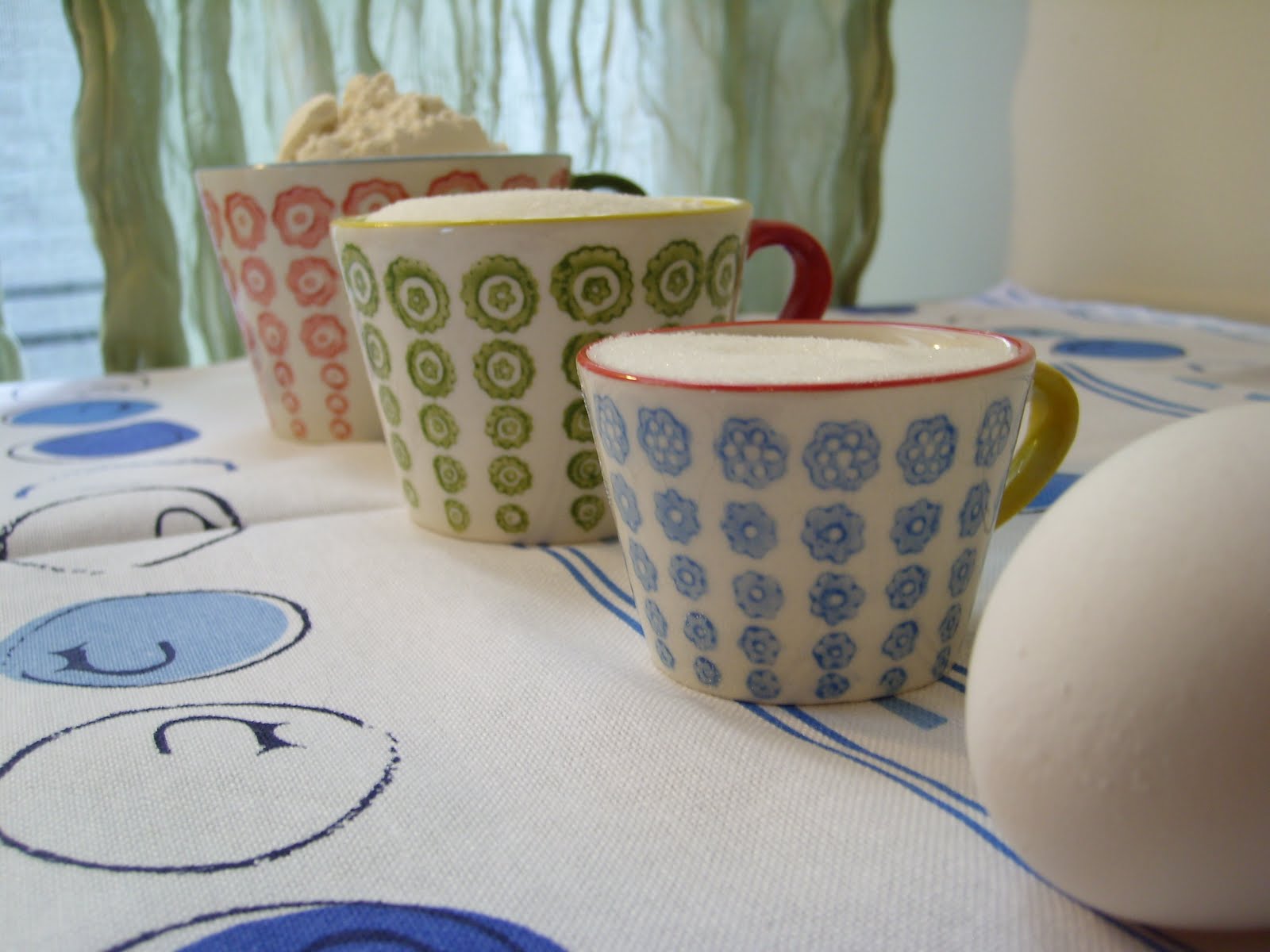

2. Melt the butter in a small saucepan over medium heat or in the microwave. Set aside to cool. In a large mixing bowl, beat the eggs until well blended, about 2 minutes. Add the melted butter and the milk.

3. In a separate bowl, sift in the flour. Add in the baking powder, sugar and salt. Add to the egg mixture and mix until just blended, less than one minute. It will be a thick, sticky dough if you overdo it! If you want to get fancy, you can add a dash of vanilla and 1/2 teaspoon of lemon zest. Fold in the blueberries, being careful not to burst them.


4. Cover the bowl tightly with plastic wrap and refrigerate for 2 hours. This is the secret to "crispy, crunchy bakery-store crowns" - don't skip it!

5. After 1 hour and 55 minutes, preheat the oven to 400 F. Take the bowl out and let it warm up a bit while you prepare the muffin tin. I used parchment paper instead of paper liners, and it's very simple to do. Cut four 5" wide strips of paper, then hold them together and cut into thirds. Now you have 12 squares that will give the muffins a professional look, and allow them to puff up without the "mushroom" shape that sticks to the pan.


6. Put a spoonful of batter into the center of the paper and then lower it into the tin. Repeat with the other papers, and use the remaining batter to top off each one. Sprinkle the tops with coarse sugar. Bake for 25 to 30 minutes, or until the tops are golden brown.


7. Remove from the oven and let cool before removing from the pan. If you used the parchment squares, just grab the corners and pull them out to cool on a rack.


Friday, April 1, 2011

Gazpacho from La Buena Mesa's Elizabeth Parrish

Hippocrene will have two new cookbooks out in just two weeks! We're very excited to have both authors on Hippocrene Cooks as guest bloggers this week and next. Today, Elizabeth Parrish, author of La Buena Mesa: The Regional Cooking of Spain, shares with us a delicious recipe for gazpacho. Be sure to check back next week for Giovanna's recipe from The Cooking of Emilia-Romagna! Elizabeth writes to us from Tarragona, Spain, which is about 60 miles south of Barcelona:


Summer is fast approaching and as food choices gradually shift from the hearty stews and legumes of winter to lighter fare; I begin to think about that pitcher of gazpacho that frequents my refrigerator once the warm weather hits. I like to mix up a batch and gradually eat (or drink!) it over a period of two to three days. It’s not just that it tastes good (it does); gazpacho also manages to be refreshing, satisfying and, between the juicy ripe tomatoes, the extra virgin olive oil and other fresh vegetables, a veritable antioxidant cocktail.

Tomatoes come in a variety of shapes and sizes. Spaniards distinguish between tomatoes that you use to make a sauce and those you toss into a green salad. Salad tomatoes are firm and have a greenish hue to them. All other varieties, be they large or small, pear-shaped or round are softer to the touch and yield more pulp and juice. Whenever I make gazpacho, I look for ripe, juicy tomatoes and, fortunately, the ones that work the best also happen to be the least expensive.

Another key ingredient to making a smooth gazpacho is olive oil. You want to choose a high quality, mild, extra virgin olive oil. While I love the aroma and flavor of aromatic olive oils, I find that they overpower the gentle tomato scent of gazpacho. In my opinion, mild fruity oils work best for this dish. I’ve used Nuñez de Prado, an unfiltered organic extra virgin olive oil from Andalusia that also happens to be available in the United States. Authentic Spanish sherry vinegar adds the finishing touch to this cold soup.

Gazpacho is one of those dishes that very much reflects the personal taste of the chef. Some like the sharpness of the onion and garlic to come through. Others want more or less cucumber. Personally, I prefer my gazpacho mild, with just a hint of onion and garlic. In the end, this is a cold tomato soup with tomato being the star. For this reason, I think that the soup is best when the base is delicately flavored. After that, diners can always personalize their gazpacho with the vegetable garnish, emphasizing one vegetable over the other to create their own balance, or forgoing the chopped vegetables altogether.

Gazpacho (Cold Tomato Soup)
(from La Buena Mesa: The Regional Cooking of Spain, page 167)


6 servings

6-inch length of a baguette, crust removed
1 cup ice water
8 ripe juicy tomatoes, unpeeled, cut in eighths
Pinch sugar
1 cucumber, peeled and coarsely chopped
1 green bell pepper, seeded and coarsely chopped
1 small Spanish onion, coarsely chopped
1 clove garlic
2 large spoonfuls sherry vinegar
½ cup mild extra virgin olive oil
Salt


1. Place the baguette piece in a bowl and add the ice water, followed by the tomatoes and a pinch of sugar. Add the cucumber, green pepper, onion, garlic, vinegar, and olive oil. 


2. Using an immersion blender, blend until smooth (or you can use a blender or food processor and blend in batches). (I have a small Spanish kitchen and don’t even own a blender or food processor so I use an immersion blender. Using a deep bowl helps prevent splattering.)


3. Place a strainer over a mixing bowl and press the mixture through the strainer using the back of a wooden spoon. Salt to taste and chill thoroughly before serving. Whenever gazpacho is served, it’s customary to prepare small bowls of the individual chopped vegetables so that diners can garnish to taste. Another alternative is to serve the gazpacho with croutons. (In the case of croutons, make your own with the remaining baguette. Simply cut the bread into cubes and fry in abundant extra virgin olive oil.)

Gazpacho is even better the following day after the flavors have had time to blend.


Elizabeth Parrish has spent twenty-two years living and cooking in Spain. La Buena Mesa is the result of years of research and collecting recipes from friends, family, restaurants, and home kitchens across Spain. She currently resides in Tarragona, where she teaches English and is working on a collection of Catalan recipes.


Thursday, March 24, 2011

Giovanna Bellia La Marca in The Bridgeton Journal

Giovanna Bellia La Marca, author of Sicilian Feasts and The Cooking of Emilia-Romagna (available April 15) is in the Bridgeton Journal! Giovanna is the master chef for the Italian-themed inaugural Bridgeton Food Film Fest on April 9 at the Ashley-McCormick Center. 


"Each Food Film Fest will begin with appetizers and a wine tasting, followed by a movie that focuses on ethnic cooking. Later, a master chef will hold a cooking demonstration that includes dishes from the film, ending with a five-course dinner, followed by music and dancing."


Bridgeton is certainly in for a treat! You can read the article at The Daily Journal here. 

Thursday, March 3, 2011

Hippocrene in Gastronomica Spring 11 Issue

Hippocrene has a little mention in the latest issue of Gastronomica, the Journal of Food and Culture! Turn to page 93 for "Ĺ trukli: "The Best Dish in the World" by Velimir Cindric, with an adapted recipe for Zagorje Cheese Ĺ trukli from The Best of Croatian Cooking. Cindric, a native of Zagreb, discusses the variations on this traditional dish.


Authors Gordana and Liliana on the set of Canada AM


You can get your copy of Liliana and Gordana's delicious book in stores, or online at our website and Amazon.com!


Tuesday, March 1, 2011

"Healthful Indian Flavors with Alamelu" Coming to You

Alamelu Vairavan, co-author of Healthy South Indian Cooking (Hippocrene 2008) has been captivating audiences in the Milwaukee area with her new show on MPTV "Healthful Indian Flavors with Alamelu," and we are proud to announce that it has been picked up by various PBS stations across the country! From Louisville to Honolulu, Americans are learning how to make their favorite Indian dishes at home and the significant health benefits of their spices.

Check to see if your PBS channel is airing episodes in March!